
Children · guiding jaw growth
Twin Block Appliance Winchester
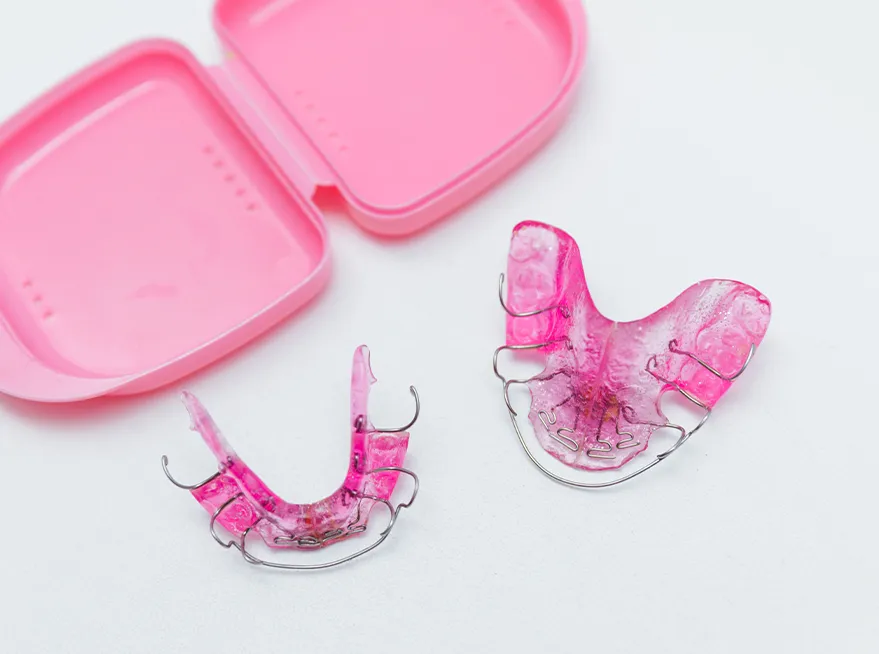
A twin block is a removable functional appliance — two custom-made plates that guide the lower jaw forward while a child grows, reducing prominent front teeth. It is worn as close to full-time as possible for around 6–12 months, usually between the ages of 9 and 14, and is usually followed by a shorter phase of braces or aligners.
- Typical length
- Around 6–12 months
- Usual age
- 9 to 14
- Wear
- As close to full-time as possible
- Monitoring
- DentalMonitoring™ scans between visits
- Price
- Set out at your free consultation
- Treated by
- A specialist orthodontist
How it works
What to expect
Specialist assessment
A free consultation and digital scan to check whether your child’s jaw relationship can be guided with growth.
Custom-made & fitted
The upper and lower plates are made for your child and fitted; most children adapt to speaking with them within a week or two.
Wear and review
Worn as close to full-time as possible, with regular reviews and DentalMonitoring™ scans in between.
Fine-tune
Once the jaw relationship is corrected, a shorter phase of fixed braces or aligners finishes the tooth positions.
Guiding Jaw Growth with the Twin Block Appliance
When a child’s lower jaw sits noticeably behind the upper — leaving the front teeth prominent and the bite unbalanced — the growing years offer a valuable window to correct it. At Winchester Orthodontic Practice we use the twin block appliance, the most widely researched removable functional appliance in orthodontics, to guide the lower jaw forward while your child grows.
What Is a Twin Block?
A twin block is a pair of custom-made removable plates — one for the upper teeth, one for the lower — with angled bite surfaces that meet as your child closes together. That gentle contact postures the lower jaw forward, harnessing natural growth to improve the way the jaws and teeth relate to each other.
Because the plates are removable, they can be taken out for cleaning and contact sports, and they’re comfortable enough to speak and eat with once your child has adjusted.
Benefits of the Twin Block
- Backed by decades of published clinical research
- Can substantially reduce a prominent overjet in a growing patient
- Lowers the risk of trauma to protruding front teeth
- Removable for cleaning and contact sports
- Often shortens or simplifies the brace stage that follows
- No headgear, and may reduce the need for extractions or jaw surgery later
What to Expect During Treatment
After a specialist assessment and digital scan, your child’s twin block is custom made and fitted. It’s worn essentially full-time — including at mealtimes where possible — as consistent wear is what drives the result. Most children adapt to speaking with it within a week or two.
Active twin block treatment typically takes around 6–12 months, usually between the ages of 9 and 14 while growth can still be guided. We review progress at regular appointments, and use DentalMonitoring™ remote scans between visits to keep a close eye on fit and wear.
Once the jaw relationship is corrected, most patients move on to a shorter phase of fixed braces or aligners to fine-tune the position of the teeth.
Caring for a Twin Block
- Clean the plates with a soft brush and cool water after meals — never hot water, which can distort them
- Keep the appliance in its box whenever it’s out of the mouth
- Remove for contact sports and swimming
- Contact us promptly if the appliance cracks, stops fitting well, or is lost — gaps in wear can slow progress
Wondering how the twin block compares with the myofunctional trainers and “facial growth” appliances you may have seen online? Read our honest, evidence-led view on our Myofunctional Appliances page.
Book a Twin Block Consultation in Winchester
If your child’s front teeth are prominent or their bite doesn’t meet properly, an early specialist assessment costs nothing and could make their treatment simpler. Call Winchester Orthodontic Practice on 01962 841009 or book a free consultation below.
Fees
Twin block treatment is priced in your written treatment plan after your child’s free consultation. Every brace and aligner fee includes your appointments, removable and fixed retainers, a 1-year retainer warranty, an oral hygiene kit and DentalMonitoring™ remote check-ins.
Families on Google
“Great practice, very professional providing braces for my teenage son, excellent cosmetic result. Always friendly and timely with appointments.”
“So pleased with the whole process for my son’s braces. Always really relaxed and all of the team are so helpful & friendly. Always easy to contact and quick to respond to any queries. We are almost at the end of his braces journey and I have recommend the team throughout and will continue to do so!”
Is the twin block painful?
There’s usually some pressure and extra saliva for the first few days, and speech can feel different for a week or two. Almost all children adapt quickly, and it’s far more comfortable than the headgear it has largely replaced.
How many hours a day does it need to be worn?
As close to full-time as possible — the twin block only works while it’s being worn. It comes out for cleaning, swimming and contact sports. Consistent wear is the single biggest factor in how quickly it works.
Can my child eat with the twin block in?
Yes — eating with the appliance in is encouraged once they’ve adjusted, as it increases wear time and the chewing action actually helps the appliance work. Very hard or sticky foods are best avoided.
What happens if the appliance is lost or broken?
Contact us straight away. Gaps in wear allow the correction to slip back, so we’ll arrange a repair or replacement quickly. Keeping the appliance in its box whenever it’s out of the mouth prevents most losses.
What age is best for twin block treatment?
Typically between 9 and 14, timed around your child’s growth spurt — that’s when the lower jaw responds best. This is why an early specialist assessment matters: it lets us pick the right moment rather than miss it.
Will braces still be needed afterwards?
Usually, yes — a shorter phase of fixed braces or aligners fine-tunes the tooth positions once the jaw relationship is corrected. Because the twin block has done the heavy lifting, that second phase is often simpler than it would otherwise have been.
Are your child’s front teeth prominent?
Find out at a free 30-minute consultation with a specialist orthodontist. Also compare myofunctional appliances, orthodontics for kids and Invisalign Teen with mandibular advancement.